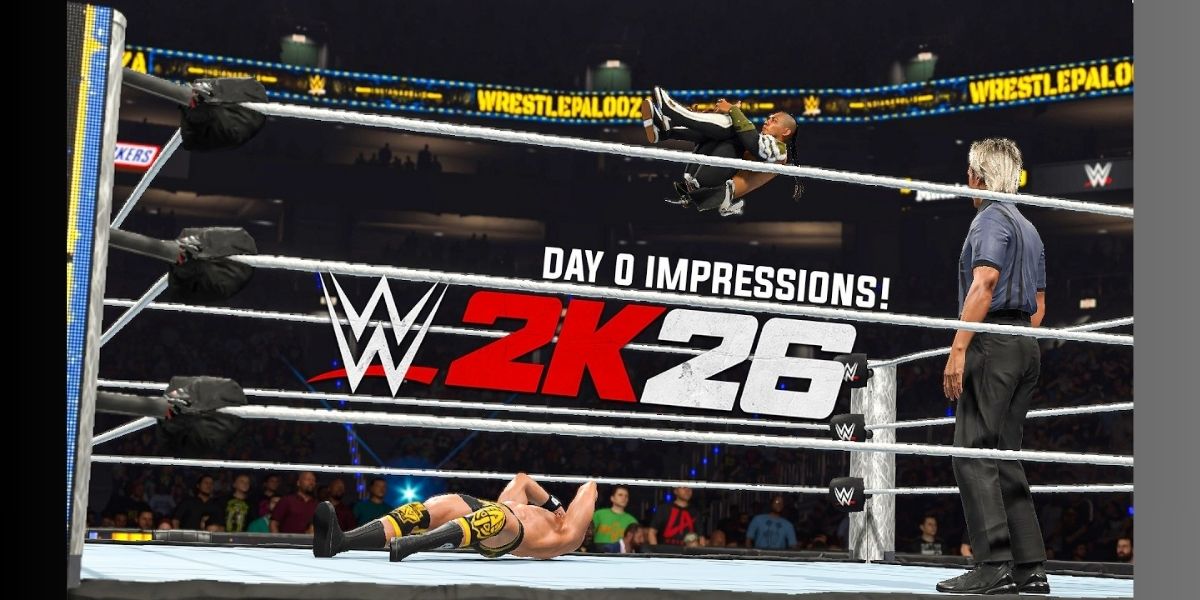
WWE 2K26 cover: The wwe 2k26 cover isn’t just a pretty box image—it’s a deliberate, marketing-and-identity statement that usually tells you what the game wants to be. When 2K selects a cover star (or multiple themed covers), they’re not only chasing mainstream recognition. They’re also shaping the season’s narrative: which era gets celebrated, which mode gets spotlighted, and what kind of “tone” the game wants you to feel before you even reach the main menu. This year, the cover strategy is more layered than a single athlete shot, and that matters for collectors and everyday players alike.
In this guide, you’ll get the full story behind the wwe 2k26 cover lineup: the Standard Edition cover star, the special edition themes, how the visual language differs by edition, and what the artwork suggests about Showcase direction, roster positioning, and the broader “season” 2K intends to run. We’ll also address common misconceptions (like “only one cover exists”), plus give you a practical buyer lens—because the best cover is sometimes the one that best matches how you actually play.
The Official WWE 2K26 Cover Lineup: One Game, Multiple Cover Identities
The first thing to understand is that the wwe 2k26 cover isn’t singular. 2K has promoted cover art for multiple editions, presenting distinct visual identities tied to different themes. An official social post from 2K shows a collage of the covers across the edition lineup, which signals this is a deliberate multi-cover approach rather than random retailer variations. For collectors, that’s a big deal: it means the cover you display on a shelf can communicate a specific era or “vibe,” not just the same image in a different border.
From a brand perspective, multi-cover strategy also solves a real marketing challenge: WWE fandom isn’t one audience. Some players want modern stars and current-day presentation; others buy yearly for nostalgia eras; others want the executive “legend” energy and the prestige framing. By splitting cover art across editions, 2K can speak to those segments without diluting the core message. That’s why the wwe 2k26 cover story is best told as a set—Standard plus premium variants—rather than a single headline image.
Standard Edition Cover Star: Why CM Punk Is the Headliner
The Standard Edition wwe 2k26 cover features CM Punk, and 2K’s official communications explicitly frame him as the headlining cover star for the year. This is more than a popularity pick—it’s a narrative pick. A cover star is often a “north star” for the game’s marketing beats, and in WWE 2K’s structure, that typically connects to Showcase focus, core presentation, and the identity of the season’s promotional campaign.
CM Punk as cover headliner also plays perfectly into the way WWE games market “moments.” His career arc is inherently moment-driven: returns, controversies, iconic promos, and high-stakes matches that fans love to debate. 2K’s own Ringside Report explicitly positions his presence as central, linking the cover headliner to the year’s Showcase framing. In other words, the wwe 2k26 cover choice isn’t just aesthetic—it is a roadmap for what the game expects you to relive, rewrite, and remix.
What the CM Punk Cover Art Communicates Through Design
The Standard wwe 2k26 cover composition is built to read instantly at thumbnail size: a strong central portrait, high contrast, and aggressive brand colors that pop in digital storefront tiles. That’s not accidental. Most purchases now happen through store pages, console carousels, and social previews—so cover art has to “work” as a square image just as well as it works on a physical case. The CM Punk art leans into intensity and personality recognition, which is exactly what you want when the cover star is meant to carry the marketing narrative.
You can also read the cover as a tone-setting device. A cover doesn’t need to show match types to hint at gameplay; it sets expectations for attitude and presentation. Punk’s cover framing—serious expression, bold lighting, decisive posture—suggests a season built around grit, realism, and rivalry energy more than pure spectacle. That doesn’t mean the game lacks fun modes; it means the marketing “anchor” is a character whose brand is built on sharp edges and high stakes.
The “Cover Superstars” Concept: It’s Not Only One Face
2K’s official WWE 2K26 page uses the language of “cover superstars,” which is a subtle but important distinction: it implies a broader cover identity than a single person on one box. This fits with the edition-based cover strategy and signals that 2K sees the year’s marketing as a portfolio of faces and eras rather than a single athlete campaign.
For players, this also changes how you should interpret announcements. When a game pushes “cover superstars,” it’s often telling you: expect multiple featured icons across modes, menus, and promotional beats. The wwe 2k26 cover conversation becomes less about “who made it?” and more about “which identity do you want to buy into?”—modern star power, executive legend prestige, Attitude Era nostalgia, or Monday Night War history.
Special Edition Covers: Why 2K Uses Era-Driven Artwork
Special edition wwe 2k26 cover art exists because WWE’s audience is era-centric. Fans don’t just follow wrestlers; they follow eras like story universes—Attitude Era, Ruthless Aggression, Monday Night War, and modern WWE. When 2K ties cover art to an era, they’re packaging a feeling: the soundtrack in your head, the match pacing you remember, the logo designs, and the classic rivalries you still rewatch.
Era-driven covers also create “collector logic.” A collector doesn’t only want the game; they want the emblem of their fandom. That’s why you’ll see cover art that looks more like a poster than a single portrait—multiple faces, collage layouts, gritty textures, and design cues borrowed from the period. The wwe 2k26 cover lineup uses this approach to let fans self-select the edition that visually matches their wrestling identity.
King of Kings Edition Cover: Prestige Framing and Power Symbolism
One premium cover variant is positioned around the “King of Kings” branding, and coverage identifies this edition cover as featuring Triple H. That theme naturally leans into power, authority, and legacy—because Triple H is a symbol that bridges multiple WWE phases: in-ring dominance, faction identity, and the modern executive-era perception. In edition marketing terms, it’s a “prestige” wrapper meant to feel premium before you even scroll down to the bonus list.
Visually, the King of Kings concept also works because it reads across generations. Older fans remember the peak entrance theatrics and faction era dominance; newer fans recognize the broader WWE brand legacy around him. A prestige cover is designed to make the edition feel like a trophy purchase, and that’s the core psychology of premium packaging: it’s not only what you get, it’s what it signals about you as a fan. The wwe 2k26 cover strategy clearly uses that collector psychology.
Attitude Era Edition Cover: Why Collage Art Fits That Period
The Attitude Era wwe 2k26 cover artwork style leans into a crowded collage approach multiple recognizable stars, dramatic expressions, and a visual chaos that mirrors the era’s on-screen pacing. That’s why collage works here: Attitude Era wasn’t a single hero story; it was a weekly collision of factions, betrayals, shock moments, and overlapping rivalries. A single-face cover would undersell what fans remember about that time.
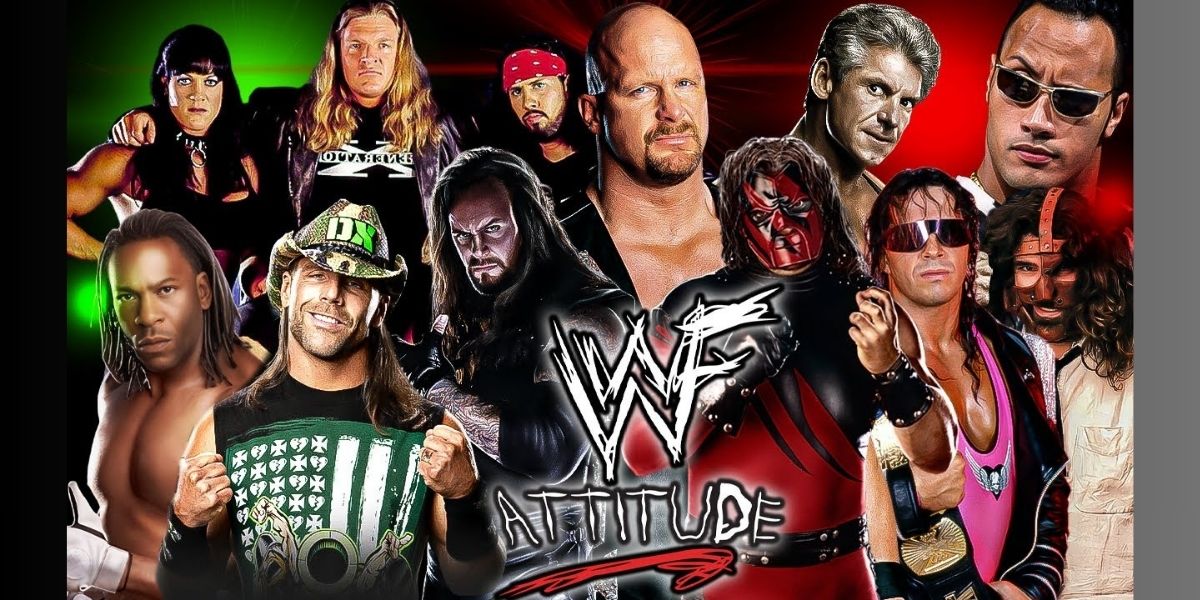
From a design perspective, the Attitude Era cover also benefits from “recognition density.” In digital storefronts, you might only glance for one second. A collage gives you multiple chances to spot someone you love, which can trigger purchase intent faster than a single portrait—especially for nostalgia editions where the buyer is motivated by memories more than mechanics. In that sense, the wwe 2k26 cover isn’t just art; it’s conversion strategy tailored to a specific fan psychology.
Monday Night War Edition Cover: Icon Warfare as a Visual Theme
The Monday Night War wwe 2k26 cover is built around rivalry framing—faces arranged like opposing forces, gritty textures, and an “us vs them” composition that mirrors the era’s cultural positioning. The Monday Night War wasn’t only about individual stars; it was about brands, broadcast identity, and the feeling that wrestling was a weekly battle for attention. Cover art that emphasizes confrontation aligns naturally with what that era meant.
This cover style also has a modern marketing advantage: it turns a historical concept into a simple story. Even if you’re not deeply familiar with every face, you understand conflict at a glance. That clarity is why the Monday Night War theme translates well into cover art—because the premise is legible instantly. The wwe 2k26 cover lineup uses that legibility to make a premium edition feel like a “documentary poster” you can own.
The Cover as a Roadmap: How Box Art Signals Showcase Direction
WWE 2K often uses the cover to point you toward what the game wants you to explore first. In WWE 2K26, 2K’s official newsroom release and Ringside Report messaging connect CM Punk’s cover headlining to the year’s Showcase framing. That’s important because Showcase is one of the most “cover-adjacent” modes: it’s where the game becomes a playable narrative about a career, an era, or a theme.
When the cover and Showcase align, it creates cohesion across the season. Your menu experience, marketing beats, and content rollout feel like parts of one story rather than a pile of features. This is why cover discussion matters even to players who say they “don’t care about art.” The wwe 2k26 cover can tell you, in advance, which lens the developers and marketers want you to look through when you start playing.
A Short Quote That Explains the Cover’s “Second-Time” Significance
2K’s official announcement includes CM Punk reflecting on the meaning of being on the cover again. Here’s the key line, kept brief:
“Now I join a very exclusive group… who have done it twice.”
That quote matters because it frames the cover not as a random selection but as a milestone and legacy moment—something WWE games often monetize well because legacy sells. It also hints at why the year’s narrative choices may lean into “rewrite history” energy: a cover star whose identity is tied to contested history is perfect for a mode where players get to control outcomes and re-stage career beats.
Cover Art and Roster Messaging: Why the Cover Star Is a “Roster Signal”
A cover star can also act as a roster signal, suggesting which characters and archetypes will be emphasized in presentation, commentary tone, and marketing highlights. On the official roster page, 2K frames CM Punk’s presence as a major return and describes his role in the game’s Showcase context, which reinforces that the cover isn’t disconnected from playable content.
For fans, this matters because it helps set expectations for who gets spotlight polish: entrances, animations, commentary lines, and narrative attention. The wwe 2k26 cover isn’t a guarantee of perfect balance, but it does correlate with “presentation priority.” If your favorite star is on a special edition cover, that often means the game expects you to engage with that era and those icons as part of the broader content ecosystem.
Why Cover Variants Exist: Collectors, Digital Stores, and Algorithm Reality
In 2026, cover art has to serve two worlds at once: physical collectors and digital algorithms. In physical retail, cover art sells presence—something that looks premium on a shelf. In digital storefronts, cover art sells click-through—the ability to stand out as a small tile among dozens of games. Multiple edition covers increase the number of distinct tiles a publisher can market, which can increase visibility across platform categories and promotional placements.
For buyers, the practical takeaway is simple: don’t treat cover variants as “fluff.” They are signals about positioning, and sometimes about the bundle strategy behind each edition. The wwe 2k26 cover lineup is telling you that 2K expects multiple buyer personas—modern-era players, nostalgia-era players, prestige collectors—and it’s optimizing its packaging to capture all of them without forcing one identity on everyone.
Common Misconceptions About the WWE 2K26 Cover
One common misconception is that only the Standard Edition “counts” as the real cover. In reality, publishers treat special edition covers as official marketing assets, and 2K has shown the set of covers publicly, making the edition covers part of the official identity structure for the release. That matters if you care about authenticity in your collection or if you want artwork that matches your fandom era.
Another misconception is that cover star selection is purely popularity-based. Popularity matters, but so does story fit. A cover star needs to carry interviews, trailers, and narrative framing for months. That’s why the wwe 2k26 cover feels tightly connected to the broader campaign language in official materials—because the cover is designed to be the campaign’s face, not a one-day reveal.
How the Cover Connects to “The Show Never Stops” Brand Message
The Steam listing prominently uses the phrase “THE SHOW NEVER STOPS,” and 2K’s broader messaging frames WWE 2K26 as a game with an enormous roster and sustained engagement. Cover strategy supports that message: multiple covers for multiple audiences implies continuous energy, multiple eras to explore, and replay loops that stretch beyond a single weekend.

This also hints at how WWE 2K wants to be consumed now: as a season, not an event. A season needs multiple entry points—new fans, returning fans, nostalgia fans—and the wwe 2k26 cover lineup acts like a set of doors into the same building. You pick the door that feels like “your” wrestling identity, and then the game tries to keep you engaged across modes and updates.
Detailed Comparison Table: Every WWE 2K26 Cover Theme by Edition
Below is a structured view of how each wwe 2k26 cover variant functions as both art and product positioning. This is not about “which is coolest,” but about which communicates the right identity for different buyer types.
| Cover / Edition identity | Primary cover focus | Visual language | Best for | What it signals |
|---|---|---|---|---|
| Standard Edition cover | CM Punk | Single-star intensity, high contrast, modern storefront readability | Players who want the core game identity and current-era tone | Cover star–driven Showcase framing and modern campaign focus |
| King of Kings Edition cover | Triple H (reported/featured on edition cover) | Prestige framing, “legacy power” aesthetic | Collectors and fans of authority/legacy branding | Premium positioning and “iconic status” packaging logic |
| Attitude Era Edition cover | Multiple Attitude Era icons | Poster collage, chaotic energy, nostalgia cues | Era loyalists and “classic moments” fans | A historical lens and recognition density for fast nostalgia conversion |
| Monday Night War Edition cover | Multiple Monday Night War icons | Rivalry composition, “brand battle” visual tension | Fans of WCW/WWE rivalry history and faction warfare vibes | Conflict-first storytelling and era-documentary poster styling |
What Collectors Should Look For: Authenticity, Printing, and “Which Cover Is Official”
Collectors often ask whether third-party image galleries are “real.” The most reliable approach is to treat official 2K channels and official WWE 2K pages as primary confirmation, then use galleries as visual references. 2K has posted the covers as a set, and the official WWE 2K26 site and newsroom materials reinforce the cover headliner and cover-superstar framing. That’s the chain of authenticity you want.
If you’re collecting physical, you should also consider regional packaging differences and retailer display images. Digital storefront art can be slightly cropped or re-laid-out compared to physical print. The practical rule is: if the central art is consistent and confirmed by official sources, the cover is legitimate; if you see a radically different cover that only appears on fan art sites, treat it as unofficial. The wwe 2k26 cover ecosystem is large enough now that fan-made covers circulate easily, so verification matters.
Cover Art vs Fan Covers: How to Spot Unofficial Designs
Unofficial covers often have telltale signs: mismatched logos, incorrect rating icons, inconsistent 2K branding placement, or typography that doesn’t match the franchise’s established layout rules. Fan covers can look impressive, but they usually reveal themselves in these small brand-standards details. That’s not criticism—fan art is part of the culture—it’s just important if you’re writing guides or publishing images in a way that implies “official.”
If you’re creating content around the wwe 2k26 cover, protect your credibility by citing official sources for the cover star and edition lineup, then using third-party galleries only as visual confirmation. This approach keeps your article clean for readers and reduces the chance of spreading a fake cover that later needs correction, which can hurt trust signals and on-page engagement.
What the Cover Suggests About Universe, Creations, and Player Identity
Cover art is also a statement about “who the player is” in the game’s fantasy. When WWE 2K highlights multiple cover superstars and era-centric variants, it’s telling you the game wants to support multiple identity fantasies: modern top-star rivalries, historic era replays, faction warfare nostalgia, and prestige legend vibes. That aligns with 2K’s own messaging about depth across modes and the idea of rewriting history “your way.”
It also aligns with the direction implied by Universe and Creations reporting in official Ringside content—expanding tools, adding the WWE Draft concept in Universe, and improving community creations. When a game invests in identity tools, cover strategy that celebrates multiple identities makes more sense. The wwe 2k26 cover lineup looks like a visual parallel to “play the era you love, build the WWE you want.”
Buying Guidance Through a Cover Lens: Which Cover Fits Which Player
If you’re a Standard Edition buyer, your decision is usually about value and simplicity—you want the mainstream, canonical face of the release. In that case, the CM Punk Standard cover is the cleanest representation of the year’s core marketing, and it’s the safest pick if you don’t want your purchase identity tied to one nostalgia era.
If you’re a premium edition buyer, you’re often buying emotion and identity as much as content. The best approach is to choose the edition whose cover you actually want to live with—on your shelf, in your library tile, and in your personal “this is my era” story. A lot of people underestimate how much that matters over a full year of play. The wwe 2k26 cover options are designed to make that emotional choice easy.
SEO Reality Check: Why “WWE 2K26 Cover” Is Trending
Cover reveals generate search spikes because they combine certainty (a real image) with speculation (what does it mean?). The moment a cover is confirmed, the community starts mapping it to Showcase possibilities, roster focus, match types, and even the broader promotional roadmap. That’s why cover content performs well: it’s both news and analysis in one package.
It also performs well because it’s inherently shareable. People don’t just read about cover art—they post it, argue about it, and compare it to previous years. If you’re writing for engagement, the wwe 2k26 cover topic has a built-in conversation loop: favorite edition, best composition, most iconic era, and whether the cover star “fits” the year’s gameplay direction.
Conclusion
The wwe 2k26 cover is one of the clearest signals 2K has sent in years about how they see the WWE 2K audience: not as a single group, but as multiple communities defined by era, identity, and what they want wrestling games to feel like. The Standard Edition’s CM Punk cover provides a modern, narrative-forward anchor, while premium covers expand the brand into legacy prestige and era nostalgia.
For players, the takeaway is practical. If you want the canonical face of WWE 2K26, the Standard cover is the clean pick. If you want your purchase to represent your wrestling era—and you like premium packaging identity—the edition covers are doing exactly what they’re designed to do: let you buy the version of WWE history that feels most like your WWE.
FAQ
Below are focused questions people ask when the wwe 2k26 cover reveal starts circulating, each answered with clear, skimmable context.
Is CM Punk officially the WWE 2K26 cover star?
Yes—2K’s official announcement and Ringside messaging identify CM Punk as the headlining cover star, which is why he appears on the Standard wwe 2k26 cover and is tied to the year’s Showcase framing.
Are there multiple WWE 2K26 cover arts for different editions?
Yes—2K has shown multiple covers across the edition lineup, and the wwe 2k26 cover discussion is best understood as Standard plus special edition variants with distinct themes.
What are the Attitude Era and Monday Night War WWE 2K26 covers?
They’re special edition cover variants presented as era-themed poster-style artwork, using multiple iconic faces to represent the Attitude Era and the Monday Night War identity within the wwe 2k26 cover lineup.
Is the King of Kings Edition cover linked to Triple H?
Coverage and the shared edition cover set indicate the King of Kings edition cover features Triple H, aligning the premium wwe 2k26 cover identity with prestige and legacy branding.
Where can I verify the official WWE 2K26 cover images?
The most reliable verification comes from official 2K/WWE 2K pages and 2K’s official social posts showing the cover set; use third-party galleries as visual references after you confirm the wwe 2k26 cover details from official sources.
Does the WWE 2K26 cover indicate what the Showcase mode will focus on?
Yes—2K’s Ringside Report explicitly connects CM Punk’s cover headlining to the Showcase spotlight, so the Standard wwe 2k26 cover functions as a strong hint about the game’s narrative focus.