Israel Iran: The israel iran rivalry is one of the most consequential fault lines in international politics because it blends ideology, deterrence, intelligence competition, proxy warfare, and nuclear-risk management into a single, fast-moving strategic contest. If you follow headlines casually, it can look like a simple cycle of “attack and response.” In reality, the conflict operates across multiple layers—some visible, some deniable—and those layers often matter more than the loudest breaking-news banner.
As of February 28, 2026, the israel iran story is not academic. Reuters reporting describes Israel announcing a pre-emptive strike against Iran, with regional airspace disruptions and heightened spillover risks across the Middle East. This article explains how the rivalry works, why escalation sometimes accelerates suddenly, what practical signals to watch, and how to interpret developments without getting trapped in rumors or one-sided narratives.
Why Israel–Iran Matters More Than a Bilateral Dispute
At its core, israel iran is a competition over regional order. Israel sees Iran’s missile capabilities, network of aligned non-state actors, and nuclear trajectory as strategic threats that could constrain Israel’s freedom of action and raise existential risks. Iran, in turn, frames its posture as deterrence against Israeli and Western pressure, while also competing for influence through regional alliances and ideological positioning.
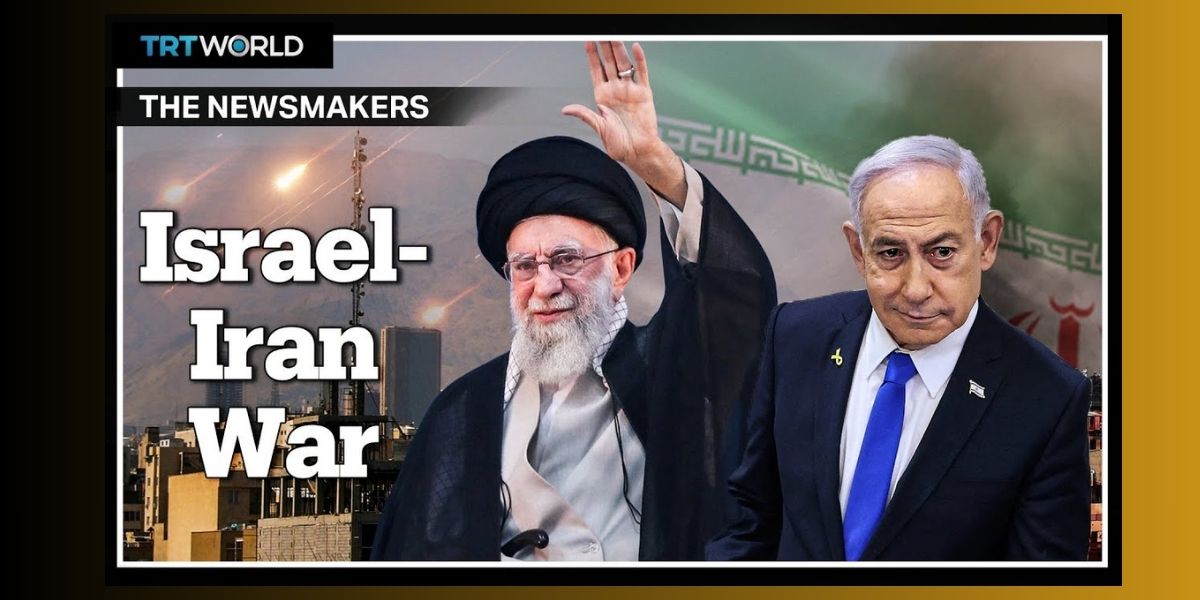
The global impact comes from “connected systems.” When israel iran tensions spike, you often see rapid effects on civil aviation, shipping advisories, diplomatic agendas, and market risk sentiment—even if the kinetic exchange is geographically contained. On February 28, 2026, Russia’s transport authorities cited military escalation and airspace closures as Russian airlines suspended flights to Iran and Israel, illustrating how quickly a regional crisis becomes an international operational problem.
A Modern Timeline: How the Rivalry Evolved Into Direct Exchange
For years, the israel iran contest largely stayed in the gray zone: covert action, cyber operations, and strikes on third-country territory designed to manage escalation while still applying pressure. That pattern began to shift as direct exchanges became more conceivable—and then more normalized—especially after large-scale missile and drone episodes in the mid-2020s that broke longstanding assumptions about how far each side would go.
By late February 2026, the reporting landscape reflects an escalated phase: Israel said it carried out a pre-emptive attack, while Reuters also reported that the United States and Israel struck Iran amid broader political messaging and heightened regional alert conditions. Whether individual claims are framed as deterrence, retaliation, or prevention, the broader change is this: direct action is now a prominent tool, not a distant taboo—which increases the pace and volatility of the israel iran cycle.
The Nuclear File: Why It Sits at the Center of Strategic Fear
The nuclear dimension is not the only driver of israel iran tension, but it is the most structurally destabilizing. Nuclear capability—real, potential, or perceived—reshapes deterrence, compresses decision time, and intensifies worst-case planning. Even small declines in monitoring confidence can change the incentives for risk-taking, because leaders start acting on assumptions rather than verifiable facts.
On February 27, 2026, Reuters summarized an IAEA-centered focus urging inspections and reporting on Iran’s stockpile and monitoring issues, noting an estimate of uranium enriched to up to 60% and the relevance of verification to broader negotiations. In practice, when the verification environment deteriorates, the israel iran competition becomes more brittle: hawkish factions gain leverage, diplomatic compromise narrows, and each side becomes more willing to take disruptive actions to avoid strategic surprise.
Missiles, Drones, and Air Defense: The Technology That Speeds Up Crisis
The israel iran rivalry is also shaped by the tools available. Drones and missiles allow states to choose from a spectrum of actions—symbolic strikes, infrastructure disruption, decapitation attempts, saturation attacks—without the political and military costs of large ground operations. That flexibility can support deterrence, but it also makes “limited escalation” feel easier, which can become a trap when both sides keep raising the ceiling.
The defensive side matters too. Air defenses, early warning, and coalition interception capabilities influence how leaders interpret outcomes. If an attack is largely intercepted, one side may feel emboldened; if defenses are penetrated, pressure to respond can intensify. In late February 2026, the civil side of the story—airspace closures and rerouting—became a visible indicator of perceived risk, with multiple countries and carriers changing operations due to regional escalation.
Proxies and Partner Networks: The Indirect Battlefield
A defining feature of israel iran is that the contest often travels through partners, aligned groups, and contested spaces outside both countries’ borders. This creates strategic ambiguity: actions can be plausibly deniable, responses can be calibrated, and escalation can be “outsourced.” But it also creates a control problem. The more actors involved, the harder it becomes to pause conflict cleanly—because different groups have different incentives, audiences, and risk tolerances.
This proxy layer also shapes diplomacy. Even if Israel and Iran reduce direct strikes, indirect pressure can continue through harassment at sea, sporadic rocket fire, cyber disruption, or political destabilization campaigns. That’s why serious analysts treat israel iran as a system with multiple valves: turning down one channel does not automatically turn down the others, and sometimes pressure simply reappears somewhere else.
Shipping, Energy, and the Strait of Hormuz: The Economic Pressure Point
When israel iran tensions rise, maritime security becomes an immediate concern because global commerce depends on safe passage through key waterways. In crises, the most important signals often come from operational advisories: warnings about missile or drone threats, port risks, harassment, and electronic interference that can disrupt navigation systems.
On February 28, 2026, Reuters reported that Greece’s shipping ministry advised Greek-flagged vessels to avoid high-risk routes such as the Persian Gulf, Strait of Hormuz, Gulf of Oman, and nearby areas after strikes against Iran, explicitly citing threats including electronic interference and navigational disruption. Even without full blockade scenarios, war-risk insurance spikes, rerouting costs rise, delivery times stretch, and energy markets price uncertainty—making the israel iran rivalry a direct input into global inflation risk and supply-chain reliability.
The United States and Regional States: Why “Coordination” Changes the Target Set
A central question in israel iran is how the United States and regional states posture during spikes in conflict. Military coordination, intelligence sharing, and political backing can influence Iran’s perception of who is involved—and therefore what constitutes a legitimate target. The more Iran believes a coalition is operating as a unified system, the more likely it is to consider broader retaliation options.
Reuters reporting on February 28, 2026 described Israel’s operation as planned in coordination with the U.S., and also referenced Iranian warnings about retaliation, including potential targeting of U.S. bases in neighboring countries under certain conditions. That dynamic is exactly why israel iran escalations can expand laterally: once third parties become operationally relevant, the conflict’s geometry changes from a line into a web.
A Practical Intelligence Lens: How to Read Conflicting Claims
The hardest part of following israel iran is information reliability in the first 24–72 hours of a crisis. Early reports are often partial, shaped by operational security, or deliberately framed to influence public opinion and international response. The solution is not cynicism; it’s method. Separate “what happened” from “what it means,” and treat each as a different category of claim.
A useful approach is to watch for converging indicators: airspace restrictions, maritime advisories, verified imagery, official statements that include specific locations or objectives, and diplomatic actions such as emergency meetings or inspection demands. For example, the same late-February 2026 window included strike reporting, major flight disruptions, and shipping advisories—signals that the system-level risk environment changed, not just the headline narrative.
Table: The Key Israel–Iran “Signals” That Predict What Happens Next
The fastest way to stay grounded in israel iran coverage is to track observable signals and what they typically precede. This is not prediction; it’s situational awareness that helps you interpret whether momentum is moving toward containment or expansion.
| Signal to Watch | What It Usually Indicates | Why It Matters in Israel Iran | What to Monitor in Real Time |
|---|---|---|---|
| Wide airspace closures and reroutes | High probability of further strikes | Civil systems react only when risk is concrete | Multi-country restrictions and carrier suspensions |
| Shipping advisories near Gulf routes | Elevated risk of maritime incidents | Trade and energy shocks can accelerate diplomacy | Warnings about missiles, drones, and electronic interference |
| IAEA access disputes / inspection urgency | Verification confidence is falling | Raises worst-case assumptions and “use-it-or-lose-it” logic | Language about safeguards and inspection necessity |
| Explicit “pre-emptive” framing | Narrative shaping + intent signaling | Suggests leaders want legitimacy and deterrence impact | Consistency across official channels |
| Spillover threats to bases or ports | Broader target set becomes plausible | Risk of coalition escalation rises sharply | Statements referencing regional bases and retaliation |
If several signals move at once, treat it as a higher-risk window. When only one channel is active, a crisis may still be serious—but it is often easier to manage. This “signal stacking” is one of the most practical ways to interpret israel iran without relying on speculation.
One Quote That Captures the Diplomatic Framing
In israel iran crises, legal and moral framing is not just rhetoric; it’s a tool to shape coalition behavior and international legitimacy. A recurring pattern is that officials invoke international law to justify their own actions or condemn the other side, signaling where they will push for diplomatic pressure.
A widely used formulation in such moments is the claim that an adversary’s action is “a blatant violation of the UN Charter,” a phrase often deployed to frame the dispute for international audiences and institutions. In practical terms, when you see this framing intensify, expect parallel moves: calls for emergency sessions, requests for public condemnations, and efforts to limit third-party cooperation with the opponent.
Conclusion: How to Follow Israel Iran Like an Expert
The israel iran rivalry is best understood as a strategic system with multiple levers: nuclear verification, missile deterrence, proxy pressure, maritime security, and diplomacy each affecting the others. When one lever moves, the whole system can shift, which is why seemingly “local” incidents can produce global disruption through aviation, shipping, and market risk.
To track israel iran developments intelligently, prioritize verified signals over viral claims: airspace restrictions, maritime advisories, inspection and safeguards reporting, and consistent official statements that reveal objectives. The February 28, 2026 reporting cycle—strikes, disrupted flights, and shipping warnings—shows how quickly the conflict’s risk profile can change across domains.
FAQ: Israel Iran
What is the core issue behind israel iran tensions?
The israel iran conflict combines security fears, regional influence competition, and the nuclear question, with each side interpreting the other’s capabilities as long-term strategic threats.
Why does the nuclear issue keep resurfacing in israel iran coverage?
The nuclear file matters in israel iran because verification gaps and enrichment concerns increase worst-case planning and shrink diplomatic compromise space.
How do airspace closures relate to israel iran escalation risk?
Airspace disruptions often indicate that governments and airlines see real operational danger, making them a practical, non-rhetorical signal that israel iran risk has increased.
Why is shipping near the Gulf so sensitive in israel iran crises?
Shipping advisories matter because the Gulf and the Strait of Hormuz are global trade and energy arteries, so israel iran tensions can raise costs quickly via rerouting and insurance.
What should readers watch to tell if israel iran is stabilizing or worsening?
In israel iran, stabilization is more likely when multiple signals de-escalate together—fewer advisories, fewer closures, improved verification language—while worsening risk shows up as stacked warnings across air, sea, and diplomatic channels.