

Few fixtures swing between chaos and control like rcb vs srh. On paper it’s a simple Bengaluru-versus-Hyderabad rivalry. In practice, it’s a style clash: RCB’s historically star-driven batting narratives versus SRH’s often system-led bowling plans and power-hitting eras. When these teams meet, the game can flip on one over—either a calculated matchup move or a sudden momentum burst that turns a par total into a chaseable target (or the other way around).
Recent context matters because the matchup has produced some high-scoring extremes and some ruthless collapses. A major reference point for current form is their IPL 2025 league meeting in Lucknow, where SRH posted 231/6 and beat RCB by 42 runs—an innings that underlined how quickly SRH can take the game away if their top order clicks and they finish strongly.
RCB vs SRH Head-to-Head Record: The Numbers That Frame the Rivalry
The simplest way to understand rcb vs srh is to start with the baseline record: across their IPL meetings, SRH have held a narrow edge overall. One widely cited head-to-head summary lists 25 matches with SRH winning 13, RCB winning 11, and 1 no result.
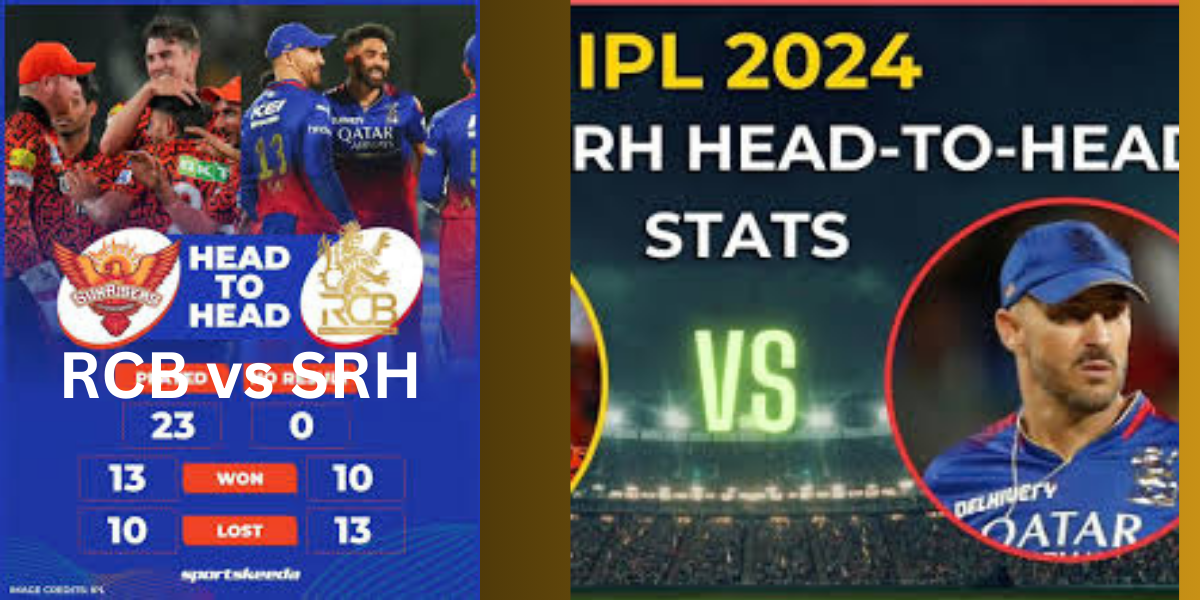
That edge doesn’t automatically predict the next match, but it does tell you something about “repeatable” patterns. Rivalries aren’t just emotional; they’re statistical fingerprints. Over time, the team that executes better role clarity especially in the middle overs and death overs—tends to keep winning close games. That’s exactly where rcb vs srh often gets decided.
The Most Recent Reference Game: IPL 2025 and the 231 Problem
When fans search rcb vs srh, they usually want the latest meaningful result—and IPL 2025 delivered a loud one. SRH’s 231/6 set the tone: powerplay intent, sustained boundary-hitting, and enough finishing acceleration to put the chase under pressure from ball one. RCB’s response ended at 189 (19.5 overs), a margin that reflected not just runs, but control: SRH stayed ahead of the chase curve.
The official IPL match report captured the consequence clearly, noting how the defeat changed RCB’s position and increased dependence on other results to secure a top-two finish. Here’s a short excerpt that shows the stakes without exaggeration: “RCB… are also now dependent on other games to ensure that they finish in the top two.”
Why This Fixture Swings So Hard: Style Clash, Not Just Star Power
A major reason rcb vs srh produces extremes is that both teams can play “high-variance” cricket. RCB have historically leaned into top-order dominance and batting depth narratives; SRH have repeatedly built phases around bowling structure and then added explosive batting when the roster supported it. When both teams commit to aggressive intent, totals balloon and bowling looks flat.
But the more important point is phase management. In this matchup, the team that wins two of the three phases—powerplay, middle overs, death—usually wins the game. That sounds obvious until you watch rcb vs srh matches where one freak over (a 25+ run burst or a double-wicket over) completely rewrites the expected outcome.
Powerplay Matchups: The First Six Overs Set the Psychology
In rcb vs srh, the powerplay is rarely “quiet.” RCB’s best starts typically come from clear boundary options against length errors, while SRH’s best starts often come from committing to hard lengths and forcing cross-batted shots early. When SRH bowlers hit the top of off consistently, RCB’s openers are pushed into risk earlier than they want.
On the other side, SRH’s powerplay batting can turn the entire match into a chase-by-proxy: if SRH reach 55–65 without heavy loss, they unlock the option to attack spin immediately after the field spreads. That is why RCB’s powerplay bowling discipline—especially line to the big side and slower-ball planning—becomes a defining storyline in rcb vs srh games.
Middle Overs: Spin, Matchups, and the Quiet War
The middle overs are where rcb vs srh becomes chess. Captains stop chasing wickets blindly and start targeting “who is uncomfortable against what.” It’s not always about the best bowler; it’s about the right bowler against the right batter’s scoring arc. If RCB can force SRH into a low-risk rotation phase, they can steal overs from the set batters and reserve strike options for later.
SRH’s middle-overs success often depends on whether they can keep a left-right or power-and-rotation balance. If the batting becomes one-dimensional—only boundary hunting—RCB can protect the ropes and invite mistakes. If SRH rotate well, the matchup advantage flips, because the bowlers are forced to change plans and lose precision.
Death Overs: Where RCB vs SRH Turns Into a Nerves Test
The death overs in rcb vs srh are frequently brutal because both teams have lineups capable of 50+ in the last four overs. That means execution matters more than reputation. The best death bowling plans in this rivalry typically share three traits: clear wide-line discipline, well-disguised pace changes, and boundary protection aligned with the batter’s strongest hit zones.
Batting-wise, finishing is about options. Teams that preserve a batter who can hit both straight and square, plus at least one batter comfortable against slower balls, tend to close games. When a team enters the last five overs with only one true power option, opponents can squeeze with matchups and protect one boundary side. That’s why rcb vs srh often punishes poor batting order timing more than most fixtures.
Venue Factors: Bengaluru vs Neutral Venues and Why It Changes Everything
A key lens for rcb vs srh is venue. Bengaluru (M. Chinnaswamy Stadium) is famously batting-friendly with fast outfields, meaning “par” is often higher and bowlers need precision rather than hope. Meanwhile, neutral venues (like Lucknow for that 2025 meeting) can bring different dimensions: slightly slower surfaces, bigger boundaries, and more value for cutters and hard lengths.
That venue shift affects tactics immediately. On flatter surfaces, captains defend by taking pace off and changing angles. On slower decks, captains defend by attacking stumps and forcing batters to generate their own power. The best rcb vs srh previews always start with: what does this venue reward, and which team’s skill set fits that reward?
Key Player Battles: What Usually Decides the Momentum
Every rcb vs srh match ends up with a handful of micro-battles that matter more than the headline names. One is the top-order hitter versus the hard-length enforcer: if the batter wins early, the innings takes flight. If the bowler wins early, the innings becomes a rebuild and SRH/RCB can dictate matchups for the next 10 overs.
Another decisive battle is against spin through the middle. If a set batter can sweep and go inside-out consistently, the captain’s defensive fields collapse. If the bowler can vary pace and deny the slog-sweep zone, batters are forced to hit into longer boundaries. In rcb vs srh, these battles decide whether the innings feels “in control” or “one mistake away from collapse.”
Captaincy and Coaching: The Hidden Hand Behind Matchups
Fans often judge captains by obvious moments—bowling changes and reviews—but rcb vs srh tends to reward subtle leadership: the ability to pre-plan matchups and still adapt when the game deviates. The best captains in this fixture anticipate the opponent’s intent and cut off the first-choice scoring shot, even if it means conceding singles.
Coaches also matter here because both teams are analytics-aware. Matchups, boundary lengths, and bowler usage patterns are heavily studied. That preparation shows up in field placements that look “odd” until the batter mistimes into the trap. In close rcb vs srh matches, those planning edges can be worth 10–15 runs—often the margin.
Team Identity: How RCB and SRH Usually Win
RCB’s best path in rcb vs srh is often a clean batting innings that keeps wickets in hand for a late surge, paired with disciplined bowling plans that protect one boundary side. When RCB win comfortably, it usually looks like controlled aggression: enough powerplay intent to avoid pressure, and enough middle-overs stability to unlock a strong finish.
SRH’s best path often looks like relentless pressure: either a huge top-order start that forces the opponent into chase mode too early, or a bowling plan that uses hard lengths and pace variation to create a scoring dip. When SRH win, it frequently feels like they dictated the tempo—especially in the last seven overs, where they either explode with the bat or suffocate with the ball, as seen in their 2025 win.
Tactical Misconceptions: What Fans Often Get Wrong
One misconception in rcb vs srh is that “batting first is always better.” In reality, the better rule is: the team that reads the surface faster is better. If the pitch is two-paced, batting first can be an advantage because you set a target and let the pitch worsen. If it’s flat, chasing can be easier because the target clarifies pacing.
Another misconception is that “a big total guarantees safety.” The 2025 season itself showed teams chasing and posting extreme scores regularly, meaning teams must still bowl intelligently even after posting 200+. In rcb vs srh, a big total is only safe if the bowling unit has a reliable plan for the death overs and a match-ready set of variations.
A Practical Table: RCB vs SRH Match Preparation Checklist
Below is a structured way to preview rcb vs srh without falling into generic clichés. Use it like an analyst’s quick dashboard.
| Match Lever | What to Check | Why It Matters in This Rivalry | “Winning Signal” |
|---|---|---|---|
| Surface speed | Flat vs two-paced | Determines whether pace-off is mandatory | Batters timing through line early |
| Powerplay plan | Hard lengths vs swing | Sets the scoring ceiling and wicket risk | 45+ with ≤1 wicket lost |
| Spin matchups | Who attacks which spinner | Middle overs decide death-over resources | 7.5+ RPO without rash outs |
| Death overs | Variations + boundary side | Both teams can score 50+ late | ≤45 conceded in last 5 overs |
| Fielding | Boundary riding + catching | One drop can become 25 runs | Clean ring + safe rope work |
| Toss decision | Bat vs bowl based on dew | Changes grips, slower-ball value | Decision matches conditions |
This is the kind of table that keeps readers engaged because it gives them a repeatable framework, not just recycled hype.
How to Build a Winning Playing XI Strategy for This Fixture
A smart XI for rcb vs srh isn’t just “best players.” It’s role balance: at least one batter who can stabilize after early wickets, at least two bowlers who can defend at the death, and enough batting depth that the team can keep attacking without panic. Teams lose this fixture when they pick for reputation and ignore role clarity.
From a tactical lens, prioritize multi-skill players and bowlers with genuine variation. Against lineups built for power, one-dimensional pace rarely survives. The teams that win rcb vs srh consistently are the ones that can change speeds without telegraphing it—and batters who can score off the “good ball,” not just punish errors.
What to Watch Live: The Three “Game-Turn” Moments
The first turning point in rcb vs srh is usually the powerplay: if a side gets two wickets early or concedes 60+, the match script changes instantly. The second turning point is the first over of spin—watch whether batters take it on or respect it. That choice reveals intent and tells you who feels ahead.
The third turning point is overs 16–18. This is where teams decide whether they’re playing for 190 or 220, and where bowlers decide whether they’ll defend with pace-off or attack stumps. In the 2025 meeting, SRH’s ability to stay ahead on tempo and then restrict RCB’s chase was decisive.
Conclusion
If you want a reliable way to analyze rcb vs srh, stop treating it as a simple “big hitters vs big hitters” spectacle. It’s a phase game: powerplay control, middle-overs matchups, and death-over execution under pressure. The head-to-head numbers show SRH with a slight overall edge, but the outcome is often decided by who adapts faster on the day.
The best part of this rivalry is that it stays fresh. Personnel changes, new coaching ideas, and venue variation keep producing new tactical puzzles—while the same pressure points remain. When those pressure points are managed well, rcb vs srh becomes a clinical win. When they aren’t, it becomes a highlight reel for the other side.
FAQs
What is the overall head-to-head record for RCB vs SRH?
Across their IPL meetings, SRH have held a narrow lead; one commonly cited summary lists 25 matches with SRH winning 13, RCB winning 11, and 1 no result in the rcb vs srh rivalry.
What happened in the most recent RCB vs SRH match?
In IPL 2025 at Lucknow, SRH made 231/6 and beat RCB by 42 runs, with the official match report noting the loss affected RCB’s top-two chances—one of the clearest recent data points for rcb vs srh.
Why are RCB vs SRH matches often high-scoring?
Both teams have had eras of aggressive batting and power-centric role design, so rcb vs srh can become a boundary-heavy contest when the surface is flat and the powerplay doesn’t produce early wickets.
Which phase matters most in RCB vs SRH: powerplay, middle overs, or death overs?
All phases matter, but many rcb vs srh matches are decided by the death overs because both teams can score rapidly late and because execution errors are punished immediately.
What’s the best way to preview an RCB vs SRH game like an analyst?
Use a checklist: surface speed, powerplay matchup plan, spin matchups, death-over resources, and fielding quality; this framework is more predictive than hype for rcb vs srh outcomes.
Where can I verify RCB and SRH match results and reports quickly?
For verified summaries and match reports, the official IPL site and trusted scorecard providers (like ESPNcricinfo and Cricbuzz) are reliable references for rcb vs srh results.